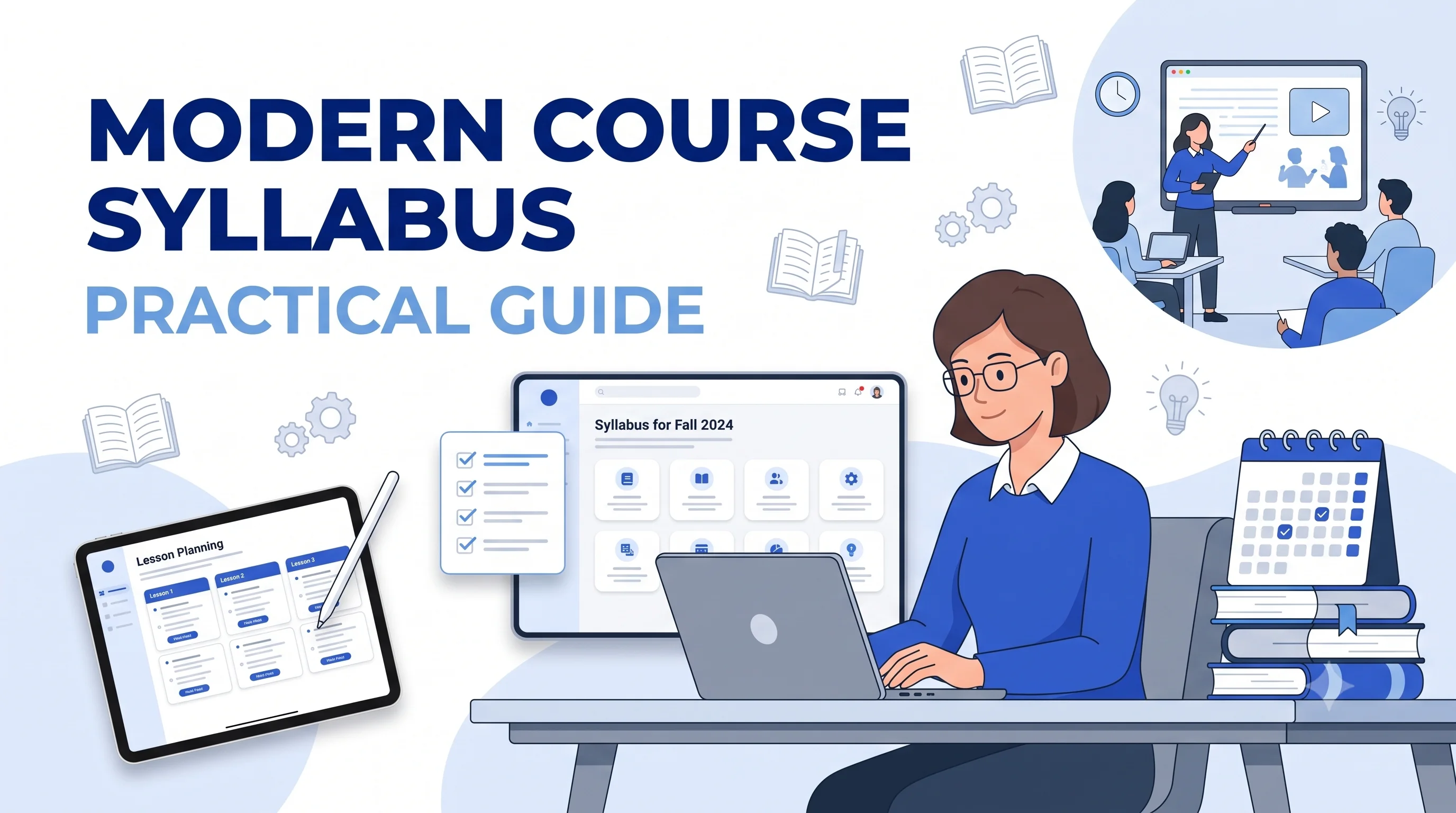
The Syllabus as a Learning Contract
A well-designed course syllabus sets the tone for the entire semester. Instead of treating it as a dry checklist of institutional rules, modern pedagogy advocates for a learner-centered syllabus that answers the student's question: "Why does this course matter to my career?"
1. Draft Action-Oriented Learning Outcomes
Use Bloom's Taxonomy to define what students will be able to do by the end of the course. Avoid vague terms like "understand" or "know". Instead, use actionable verbs like "evaluate", "synthesize", "implement", or "analyze".
2. Map a Week-by-Week Instructional Schedule
Break down the course timeline into specific weekly themes. For each week, outline:
- Required pre-readings or research case studies.
- Interactive classroom exercises or group discussions.
- Milestones for course projects and assignments.
3. Clarify Assessment Policies & Grading Rubrics
Anxiety drops when expectations are transparent. Provide detailed rubrics explaining how lab work, class participation, internal assessments, and final exams will be evaluated. State your policy on late submissions and academic integrity clearly.