1. Perfect Your Demonstration Lecture
The demonstration lecture (or teaching demo) is arguably the most critical component of the academic interview. The search committee is evaluating not just your subject expertise, but your ability to engage students and explain complex concepts simply.
- Keep it structured: Introduction, core concepts, student interaction, and summary.
- Ensure you address the audience as students, not as peer researchers.
- Have a backup plan in case the digital presentation system fails (rely on board work).
2. Align Your Research to Department Goals
Before you step into the interview room, research the existing faculty profiles of the department. Identify where your publications and research expertise align with or complement their current projects. Be prepared to explain how you can bring grant funding or establish research groups.
3. Master UGC & AICTE Portfolio Requirements
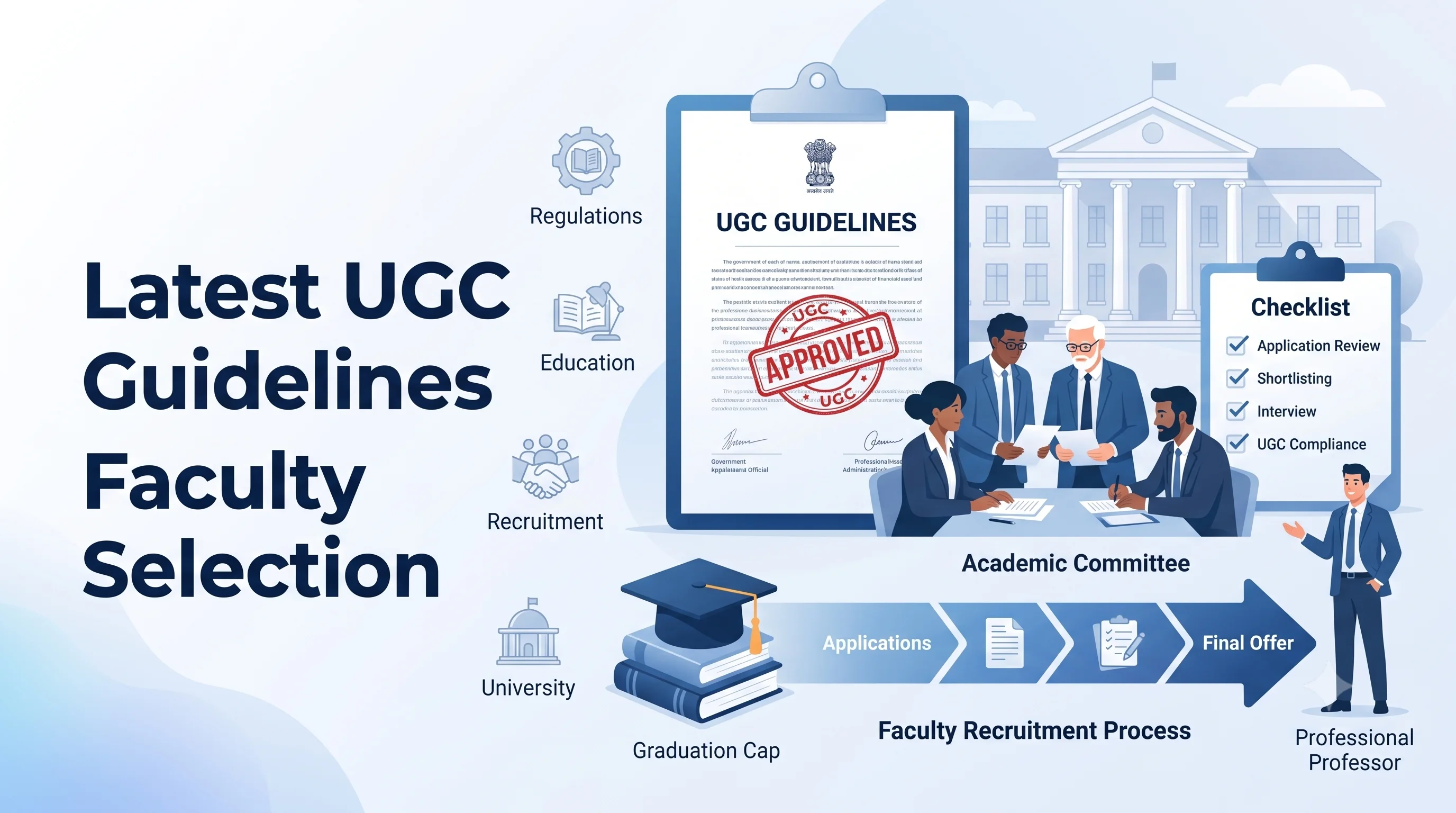
In Indian higher education, meeting the Academic Performance Indicator (API) scores and minimum qualifications is key. Prepare a structured dossier showing your publication index (UGC-CARE, Scopus), certificates of faculty induction programs, and teaching feedback ratings.
4. Prepare for Behavioral Questions
Committees will ask how you handle classroom conflicts, diverse student populations, and administrative workloads. Use the STAR method (Situation, Task, Action, Result) to provide concrete examples from your past teaching experience.
5. Ask Intelligent Questions
When given the chance, ask questions that show you are already thinking about your future role. Ask about the department's strategic vision, support for early-career research grants, or library resources for new course developments.